
Room-by-room furniture collections for TipTop
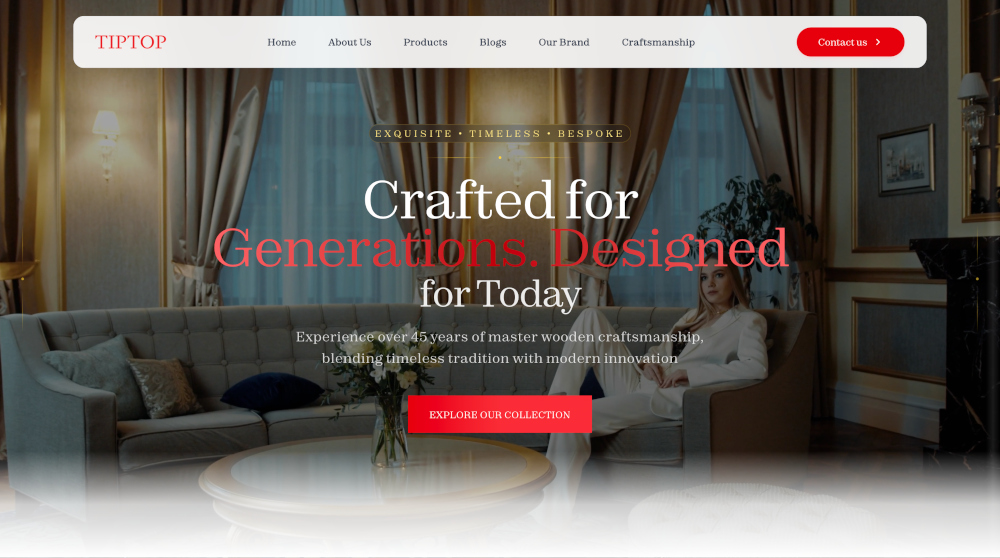
TipTop makes wooden furniture and needed the site to show collections by room, explain the workshop standard, and give a buyer a direct way to ask about a piece.
- Industry
- Furniture manufacturing
- Location
- India
The problem
Furniture buyers shop by room. A living room, a bedroom, an office, and a dining room are different jobs, and a homepage slogan does not help someone choose a wardrobe or a dining set.
TipTop’s sales argument is the making: seasoned wood, hand work, and a long workshop history. If that story is separate from the collections, the catalog looks like any other furniture grid and the workshop has no page to send a buyer to.
The solution
Collections are organized by room, with the kind of piece a buyer expects in that room. The workshop story, the quality process, and project notes sit with those collections so the reason to buy is on the same site as the furniture.
An enquiry path carries the phone, hours, and email. A buyer who has found the bedroom collection can ask about a piece without hunting for a contact page that forgot to say which collection they meant.
The same approach is how AppClust builds catalog modules.
Modules built
These are the records the TipTop Furnitures site runs on. Each one is content the team can update without a new design.
Module 1
Room collections
Living, office, bedroom, and dining collections, each with the pieces that belong in that room.
Module 2
Workshop story
The making process and the quality standard, published as part of the catalog rather than a detached about page.
Module 3
Project notes
Space stories that show finished rooms and give the collections a concrete setting.
Module 4
Buyer enquiries
Phone, hours, and email so a collection page can start a conversation about a specific piece.
Results
What the published site does for the business. These are operational outcomes of the build, taken from the live pages.
Buyers enter by room
Living, bedroom, office, and dining each have a collection, which matches how people shop for furniture.
The workshop is part of the sale
Materials and making sit with the furniture, so the quality claim has a page.
Finished rooms support the catalog
Project notes show the pieces in a space, which a specification line cannot do.
A collection can start an enquiry
Contact details are on the site with the rooms, so the ask follows the furniture the buyer was viewing.